Fix the moisture
No mold job lasts if the leak or humidity problem is still there. The roof, pipe, AC drain or bath fan is repaired first.
Spots on the ceiling or a musty smell after a leak mean the water stayed too long. The source fixed, moldy drywall and insulation removed under containment, the framing cleaned, and the ceiling rebuilt.
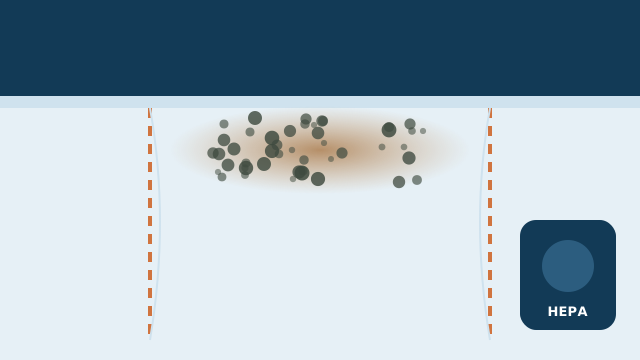
Mold needs three things: spores, which are already in every home; something to eat, which drywall paper, wood and dust provide; and moisture. Take away the moisture and it stops. Leave a ceiling wet and it usually doesn't take long.
Mold from a leak grows on the top of the drywall, in the insulation and on the joists, and shows on the ceiling late. Mold from humidity, mostly in bathrooms, grows on the painted surface first. They need very different fixes.
If the spots sit inside an old water stain, or the drywall is soft, the mold you can see is the small part. There's almost always more on the back side. The guide to how fast mold grows after a leak explains the timing.
Proper work follows the principles of the industry's mold remediation standard (ANSI/IICRC S520) and the EPA's guidance: fix the water, contain the work, remove what's contaminated, clean what can be cleaned, and dry everything.
No mold job lasts if the leak or humidity problem is still there. The roof, pipe, AC drain or bath fan is repaired first.
Plastic sheeting around the work area, HVAC vents covered, and air filtered so spores don't spread to the rest of the house.
Moldy drywall cut out past the visible growth, wet or moldy insulation bagged inside the containment and carried out.
Joists and the back of the surrounding drywall HEPA-vacuumed and cleaned. Sound wood stays; it doesn't need to be replaced.
Moisture readings until the framing matches dry areas of the house. Optional independent testing if you want it documented.
New insulation and drywall, texture matched and the ceiling repainted. See drywall repair.
In a lot of Diamond Bar homes from the '70s and '80s, the original bath fan is small, noisy and vented into the attic rather than outside. Shower steam has nowhere to go, condenses on the coolest surface, usually the ceiling above the shower, and mold follows.
Straight answers on bleach, testing and what's safe to do yourself.
On painted drywall, bleach mostly bleaches the color out of the surface. It doesn't reach growth on the back of the drywall, in the paper or in the insulation above, and it doesn't fix the moisture that started it. The EPA doesn't recommend routine use of bleach for mold cleanup. Small surface spots can be cleaned with detergent and water; mold that's back after cleaning means the drywall needs to come out.
The EPA's rule of thumb is that areas under about 10 square feet, roughly a 3-by-3-foot patch, can usually be handled by a homeowner with proper protection, as long as the moisture problem is fixed. Larger areas, mold from contaminated water, mold in the HVAC system, or anyone in the home with health concerns are reasons to bring in a professional.
Usually not. If you can see it or smell it, the plan is the same: fix the water, remove what's moldy, clean and dry the rest. Testing is useful when you suspect hidden growth with nothing visible, when there's a health question, or when a landlord, buyer or HOA wants independent proof that the area is clean afterward.
Color doesn't tell you the species, and many molds are dark. What matters is that any indoor mold growth can trigger allergy and asthma symptoms in some people, so it should be removed rather than lived with, whatever the color. If someone in the house is unwell, talk to your doctor.
Most bathroom ceiling mold isn't from a leak. It's from humidity: long hot showers, a fan that's too weak, isn't ducted outside, or isn't left on long enough. Fix the ventilation, run the fan 20 minutes after showers, and clean early spots. If the drywall stays soft or stained under the spots, it may be wet from above, and that's worth checking.
No. Paint, even mold-resistant paint, covers it but doesn't remove growth that's already in or behind the drywall. It comes back through the paint, usually in the same shape. Remove it, dry the area, then paint.