Find the real wet area
Readings across the ceiling, the walls below and the floor, so equipment goes where the water actually is.
A ceiling that looks dry from the room can still be wet on top and in the joists. The ceiling, the framing and the cavity above it are dried with dehumidifiers and directed airflow, and measured every day until they're dry.
When water comes through a ceiling, it lands on top of the drywall first. It soaks the back of the paper, sits in the insulation and wicks into the joists. The painted side, the one you can see, is the last to get wet and often the first to look dry. That's how ceilings get closed up, painted and then grow mold.
Getting the moisture out of the ceiling drywall, the framing and the cavity above it, using dehumidification and directed airflow, and confirming it with daily readings against the same materials in a dry part of the house.
Diamond Bar's dry climate helps once the cavity is open to air, but a sealed ceiling cavity makes its own humid microclimate, and it stays that way without help.
Readings across the ceiling, the walls below and the floor, so equipment goes where the water actually is.
Wet insulation removed from above, sagging sections cut out, and where useful, small vent holes so air reaches the back of the drywall.
Dehumidifiers sized to the room and the amount of water, running around the clock with doors kept closed.
Air movers aimed across the ceiling and into the cavity to keep moisture moving off the materials.
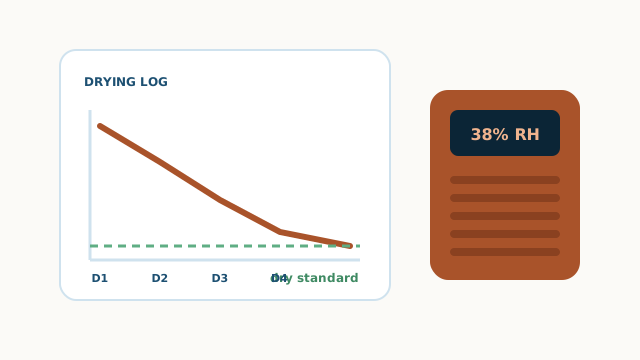
Daily readings and photos in a drying log, with equipment moved or removed as areas dry.
Wet areas match the dry reference. Only then is anything closed up, primed or painted.
A drying log is a daily record of readings, equipment and what changed. It's dull to read and extremely useful:
If another company did the drying, ask for its log before anyone rebuilds. See post-mitigation ceiling repair.
How it's dried, how long it takes and how you know it's done.
Drying the building itself, not just the room: the drywall, the joists, the top plates and any wood or framing the water reached. It means getting moisture out of materials until they're back to their normal levels, confirmed with a meter, rather than just drying the surface you can see.
Often, yes, if the water was clean, it was caught quickly, and the drywall is still firm and flat. The cavity above still needs air: wet insulation is usually pulled out from the attic, and in some cases small vent holes let dry air reach the back of the drywall. The guide on whether wet drywall can be dried explains the decision.
Readings in the wet area are compared to the same materials in an unaffected part of the house, the dry standard. When the wet areas match, the job is dry. Readings should be recorded every day so you can see the trend, and so can your insurer.
Fans move air across the surface, but without a dehumidifier the moisture they lift just stays in the room's air, and some goes back into the drywall. Open windows help on a dry Santa Ana day but hurt on a damp winter morning. Dehumidifiers remove the water from the air so the materials can keep releasing it.
Air movers and dehumidifiers make a steady hum, roughly like a strong fan, and run around the clock. They're placed to keep noise away from bedrooms where possible, and air movers are turned down or repositioned as each area dries.
For a clean-water ceiling leak with the cavity opened, typically a few days. Wet framing, dense materials, long-running leaks or cool, closed rooms take longer. Ask for the expected timeline after the first readings, and updates as the numbers come down.