Seal and refinish
For firm plaster with only a stain or light softening: dried, loose surface removed, stain-blocking primer, skim coat where needed, and paint.
Plaster handles water differently from drywall: it holds its shape, then cracks or lets go of the lath behind it. Re-securing what's sound, replacing what isn't, and finishing the repair to match the hard, smooth plaster around it.
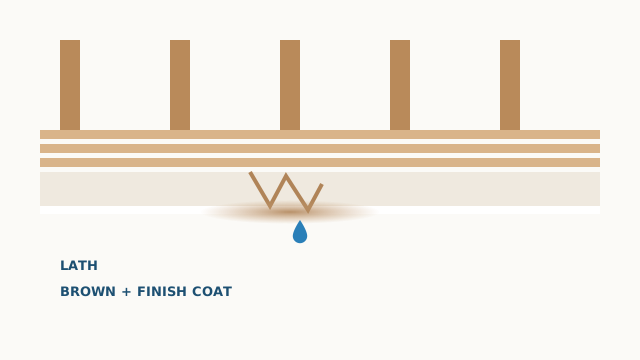
A traditional plaster ceiling is several coats of plaster pushed through wood or metal lath, so that some of it curls over the back of the lath and hardens into "keys." Those keys hold the ceiling up. Veneer plaster, used in some later homes, is a thin hard coat over a special gypsum base board.
Press gently near the stain with a flat hand. If it's solid, it's likely a surface repair. If it moves, crunches or feels hollow, the plaster has let go of the lath and needs to be re-secured or replaced.
For firm plaster with only a stain or light softening: dried, loose surface removed, stain-blocking primer, skim coat where needed, and paint.
Loose but intact plaster re-attached to the framing with plaster washers or adhesive, then cracks taped and skimmed.
Damaged plaster cut back to sound edges, lath checked, then filled in coats or patched with shimmed drywall and skimmed flush.
The source traced and repaired first, as with any ceiling.
Plaster holds water longer than drywall; dry and measure before patching.
Older plaster sampled before large areas are cut or sanded.
Loose plaster re-attached, damaged sections cut back and rebuilt flush.
Hard skim coat feathered into the original surface, primed and painted.
Cracks, sagging and matching an old finish.
Usually it can be repaired. Plaster is tough and often survives a leak better than drywall. The damaged area is cut back to sound plaster, the lath is checked and re-secured, and the hole is filled in layers or patched with drywall and skimmed to match. Full replacement is only needed when large areas have lost their grip on the lath.
Water softens the plaster's bond to the lath and can swell wood lath, then everything shrinks back as it dries. That movement breaks the 'keys' that hold plaster to lath and shows up as cracks or sagging. Cracks with a sag or that move when pressed are a sign the plaster is detaching.
Yes, and it's common. The trick is matching thickness: plaster ceilings are often thicker than standard drywall, so the patch is shimmed or built up so it sits flush, then skim-coated to blend with the hard plaster finish around it.
It can be. Plaster is heavy, and a section that has lost its keys can come down suddenly. Keep people out from under a sag and don't push on it. Re-securing it is a job for someone who can support it while it's fastened.
Fewer than older parts of Los Angeles. Most Diamond Bar homes were built from the 1960s onward with drywall ceilings. Plaster and veneer plaster do turn up in some older and custom homes, and in rooms that were finished with a hard skim coat. The guide drywall vs plaster ceiling explains how to tell.
Some older plaster and skim coats did. If the house is from before the 1980s, test before cutting or sanding large areas.